
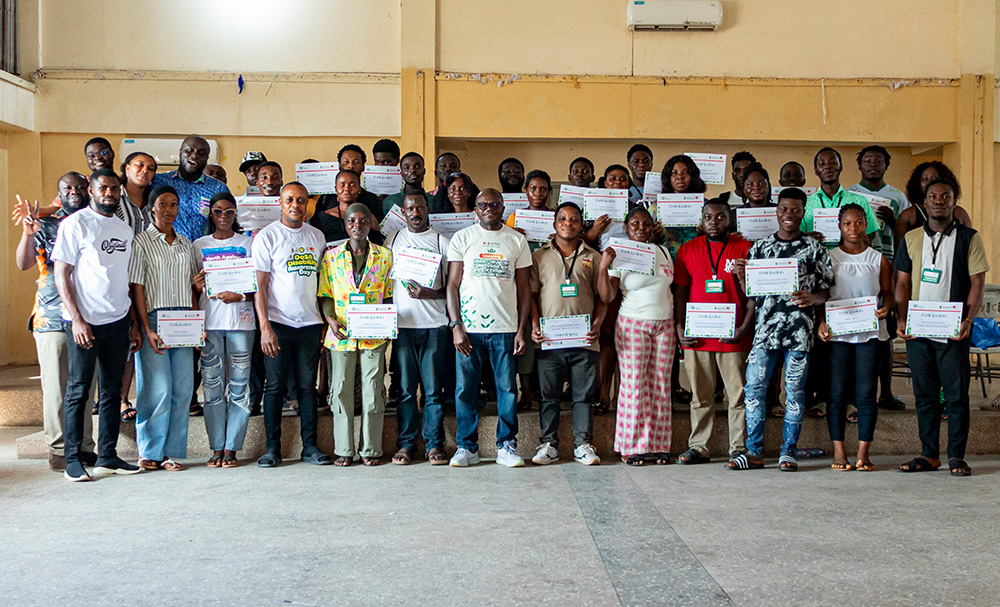
The Kwame Nkrumah University of Science and Technology, Kumasi (KNUST), Nutrition and Sustainable Agri-food Collaborative, in partnership with the Mastercard Foundation (Nkabom Collaborative), has concluded the first cohort of its Community-Based Entrepreneurship Training (CBET) in Sekondi in the Western Region.
The training was organised under the Entrepreneurship Pillar of the Nkabom Collaborative. It equipped 30 participants with practical intrapreneurship and entrepreneurship skills to start and grow viable ventures in the agrifood space.
Following the completion of the training, participants said the knowledge and tools acquired has influenced the way they think about their businesses, from identifying problems and developing solutions to managing finances, engaging customers and planning for growth.
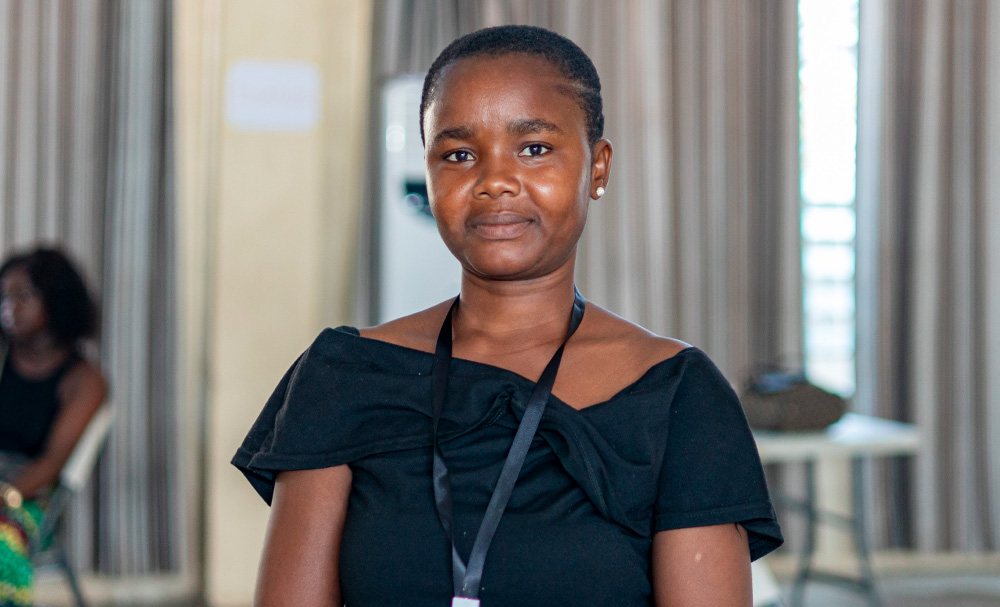
For Augustina Nyakoh Arthur, the 10-day training provided practical knowledge that has enabled her to refine her business idea and improve the way she manages her enterprise.
“The programme has really helped me to refine my idea and improve my business because of the topics that we have been taken through,” she stated.
The lesson she valued most was the business model canvas, a tool that lets an entrepreneur set out a whole business plan on a single page. Augustina said putting together a business plan had long been a struggle for her.
“Getting a business plan was a headache for me. I have really taken keen notice of it, and I am going to use it to draft my business plan,” she said.
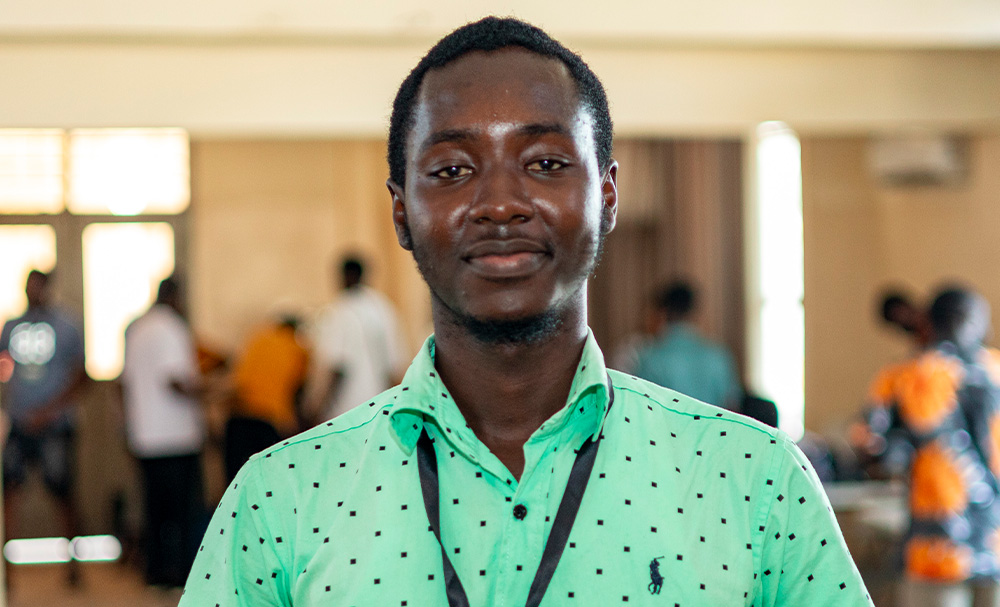
Another participant, Seth Kwamena Gordon, came to the training with a business idea already in mind and wanted to learn how to make it more innovative. He said the problem tree analysis caught his attention most because it taught him to look beneath the surface of a problem before trying to solve it.
“I learnt that you should know the problem that you are facing, the root causes, the effects and the solution you can bring up in order to make sure that your business becomes stable,” he said.
Seth highlighted that the sessions on innovation encouraged him to improve on existing products, including his own, and helped him solve several problems with them. He left the training with new belief in his venture.
“Now I believe in myself that when I go out there and bring my products up, everything will be successful and I will employ youths like me into the business,” he said.
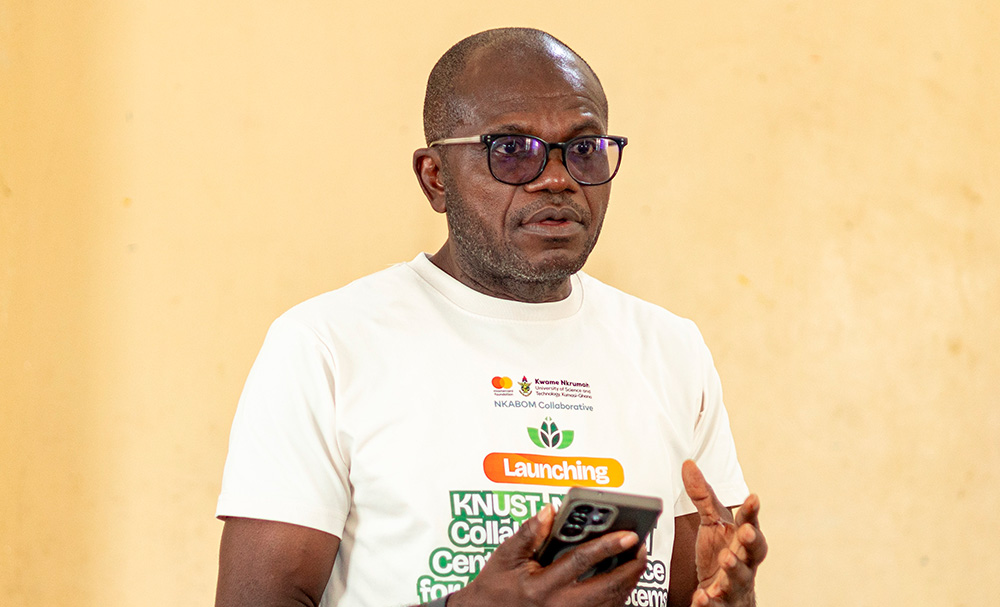
The Entrepreneurship Pillar Lead, Professor Wilberforce Achiaw Owusu-Ansah, commended participants for their progress. He stressed that the end of the training marked the beginning of a longer relationship with the Collaborative.
He described the learning and pitch sessions as practice. He urged participants to stay in their groups, keep in touch with one another and keep developing their ideas after the training.
“Once you leave here, don’t leave the idea behind. Try and stick to your group and work to ensure that you are able to perfect these brilliant ideas,” he said.
He added that participants are free to develop entirely new ideas using the tools they had learnt.
“Nobody is saying that you should stick to the very idea you demonstrated here. You are at liberty to use the same processes that we used to generate these ideas to get a better one,” he said.
Professor Owusu-Ansah announced that the Collaborative would open a call for business ideas at the end of November. Submitted ideas would be checked, and the most promising ones would be invited to pitch for funding of up to $15,000.
He assured participants of the Collaborative’s continued support and urged them to get in touch whenever they faced challenges. He stressed that receiving funding would not be the end of the journey.
Story: Michael Kwawu


